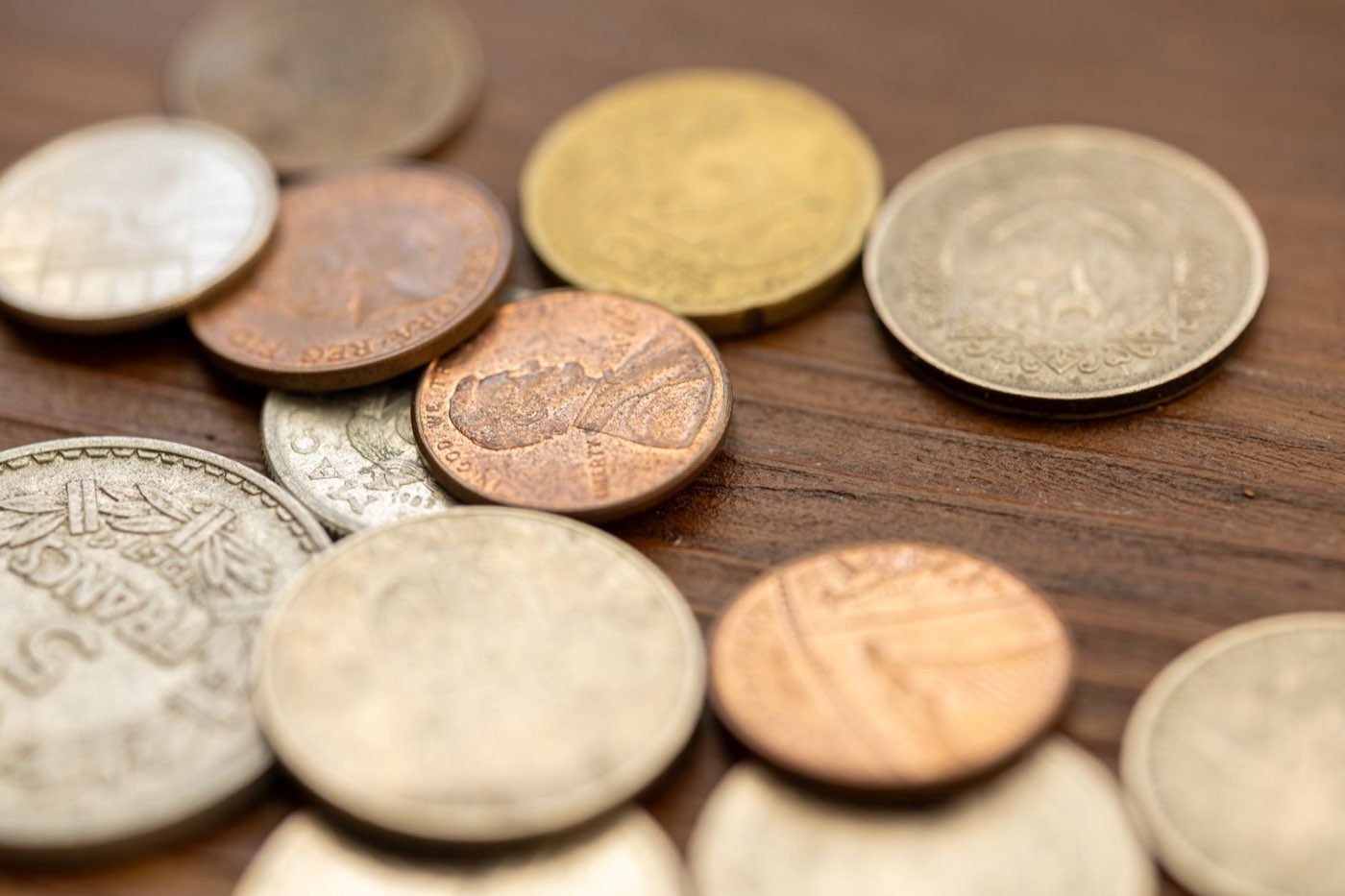
Most Valuable Wheat Pennies (1909-1958): Key Dates and Rarities Ranked
Wheat cents were struck from 1909 to 1958, and while billions were made, a small group of low-mintage dates and famous die errors carry real value. What sets these apart is scarcity (how few were minted or survive) combined with collector demand, and a single coin's price swings enormously with its grade and condition. Most wheat pennies you find in circulation are worth only a few cents above face value; the coins below are the genuine exceptions, and for any of them an exact figure depends on a professional grade, with recent sold listings the only honest price guide.
- 1.
1909-S VDB Lincoln Cent
The premier key of the entire series, nicknamed the 'King of Lincoln Cents.' Only 484,000 were struck, the lowest regular-issue mintage in the run, and it carries designer Victor D. Brenner's V.D.B. initials on the reverse before they were removed under public pressure. Added-mintmark and faked-VDB counterfeits are common, so authentication matters.
Value: This is the most sought-after date in the series and commands a very strong premium even in low grades; high-grade examples have brought five figures at auction. Verify authenticity and check recent sold listings for your grade rather than relying on any single quoted number.
- 2.
1943 Bronze Lincoln Cent (Off-Metal Error)
A famous transitional error: a leftover bronze planchet struck during 1943, the year cents were made of zinc-coated steel. Only roughly 10 to 15 genuine examples are known across all three mints. Most coins sold as this are altered or copper-plated steel cents.
Value: One of the most celebrated US coin rarities; pristine, fully authenticated examples have sold for over one million dollars. Almost all 'finds' are fakes, so this only matters after third-party authentication. A genuine 1943 cent is non-magnetic, copper-colored, and weighs about 3.11g.
- 3.
1909-S Lincoln Cent (No VDB)
A first-year key date from the San Francisco mint with just 1,825,000 struck and no designer initials, distinguishing it from the 1909-S VDB. Low mintage and first-year demand keep it scarce and consistently in demand.
Value: Commands a strong premium over common dates in every grade; check recent sold listings for your specific condition. Confirm the S mintmark below the date and that there is no V.D.B. on the reverse.
- 4.
1914-D Lincoln Cent
One of the five major keys, with only 1,193,000 minted at Denver. It is heavily counterfeited, often by altering a 1944-D or adding a fake D, so date font and mintmark spacing should be examined closely.
Value: A genuine 1914-D carries a substantial premium even when worn; consult recent authenticated sold listings for your grade. Beware altered-date and added-mintmark fakes before assuming value.
- 5.
1922 No-D Lincoln Cent (Strong Reverse)
No Philadelphia cents were struck in 1922, so every 1922 cent should show a D. The recognized key is the 'No D, Strong Reverse' (Die Pair 2) error from an over-polished die, with roughly 15,000 survivors. Diagnostics include no mintmark, a sharp reverse, a weak second 2 in the date, and strong TRUST.
Value: Only the Strong Reverse variety is the recognized key; weak-D coins are not and are worth far less. The genuine error commands a strong premium and should be authenticated. Check recent sold listings for the verified variety in your grade.
- 6.
1944 Steel Lincoln Cent (Off-Metal Error)
The mirror of the 1943 bronze error: a leftover steel planchet struck in 1944 after the mint returned to bronze. Only about 30 are known across all mints. Plated 1944 bronze cents are passed off as these.
Value: A genuine, authenticated example is a major rarity that has realized five and six figures at auction depending on mint and grade. A real one is magnetic, silvery, and weighs about 2.7g. Authentication is essential before any value is assumed.
- 7.
1931-S Lincoln Cent
A famous Depression-era key with just 866,000 struck, one of only two sub-million regular Lincoln cents. Low mintage plus strong collector demand make it a cornerstone date. Added-mintmark fakes from 1931 Philadelphia cents exist.
Value: Commands a strong premium in all grades; gem mint-state examples bring well into the hundreds and beyond. Check recent authenticated sold listings for your grade and confirm the S mintmark is genuine.
- 8.
1955 Doubled Die Obverse Lincoln Cent
The best-known doubled die in US coinage, with dramatic naked-eye doubling across the entire date, LIBERTY, and IN GOD WE TRUST. An estimated 20,000 to 24,000 entered circulation. Do not confuse genuine doubling with worthless machine-doubling.
Value: A strong, eye-visible doubled die that commands a significant premium; well-preserved examples sell into the thousands. Have the doubling confirmed as a true doubled die, then check recent sold listings for your grade.
- 9.
1909 VDB Lincoln Cent (Philadelphia)
The affordable first-year VDB variety, with 27,995,000 struck. It carries the same V.D.B. initials at the bottom of the reverse that were quickly removed, making it a popular, historically significant type coin.
Value: Far more common than its S-mint counterpart but still desirable as a first-year variety; it commands a modest premium over common dates. Check recent sold listings, especially for higher grades.
- 10.
1924-D Lincoln Cent
A genuine key date with only 2,520,000 minted at Denver. Low mintage and scarcity in higher grades keep it in steady demand, and added-mintmark counterfeits exist.
Value: Commands a strong premium over common dates, more so in mint state; review recent authenticated sold listings for your grade. Confirm the D mintmark is genuine rather than added.
- 11.
1926-S Lincoln Cent
A key date famous as a condition rarity. With 4,550,000 struck it is scarce, but it is exceptionally rare in gem mint state, making high-grade examples extraordinarily desirable.
Value: Worn examples carry a solid premium, but gem mint-state pieces are the real prize and have brought very large sums at auction. Value hinges heavily on grade; check recent sold listings for your condition.
- 12.
1931-D Lincoln Cent
A popular Depression-era semi-key with 4,480,000 struck at Denver. Lower mintage and collector interest in the 1931 dates give it consistent demand a step below the 1931-S.
Value: Commands a strong premium over common dates; check recent sold listings for your grade. Confirm the D mintmark below the date.
- 13.
1911-S Lincoln Cent
An early-series semi-key from San Francisco with 4,026,000 struck. Lower mintage makes it noticeably scarcer than common dates, especially in better grades.
Value: Commands a modest-to-strong premium over common wheat cents depending on grade; check recent sold listings. Confirm the S mintmark below the date.
- 14.
1914-S Lincoln Cent
A semi-key from San Francisco with 4,137,000 struck. While not one of the major keys, its lower mintage gives it real scarcity and steady collector demand.
Value: Carries a clear premium over common dates, more so in higher grades; check recent sold listings for your condition. Confirm the genuine S mintmark.
- 15.
1923-S Lincoln Cent
A semi-key and condition rarity from San Francisco with 8,700,000 struck. It is reasonably available worn but genuinely scarce and weakly struck in mint state, which drives demand for sharp examples.
Value: Worn coins bring a modest premium, but well-struck mint-state pieces command much more; value depends heavily on grade. Check recent sold listings for your condition.
FAQ
How do I tell if my wheat penny is rare or just common?
Start with the date and mintmark, which is the small letter (D for Denver, S for San Francisco, or none for Philadelphia) below the date. Compare against recognized key and semi-key dates like 1909-S VDB, 1914-D, 1922 No-D, 1931-S, and the 1955 Doubled Die. Most other wheat cents are common and worth only a few cents. Because keys are heavily counterfeited (added mintmarks, altered dates, plated error coins), confirm authenticity before assuming any premium value.
Does cleaning a coin hurt its value?
Yes, almost always. Cleaning, polishing, or scrubbing leaves hairline scratches and an unnatural surface that graders and collectors detect immediately, and a cleaned coin typically sells for a fraction of an original, untouched example. Never clean a potentially valuable coin. Handle it by the edges and leave the surfaces alone.
Where do I sell a valuable wheat penny?
For genuine keys and errors, the best results usually come from established coin auction houses or reputable dealers, ideally after the coin is authenticated and graded by a third-party service. Online marketplaces work for lower-value dates if you check completed (sold) listings to price realistically. Avoid selling a high-value coin raw and unverified, since both you and the buyer are taking on authentication risk.
What is coin grading and why does it matter so much?
Grading is a standardized assessment of a coin's condition, from heavily worn up to pristine mint state, expressed on a 70-point scale by services like PCGS and NGC. It matters because value can multiply many times over between a worn and a high-grade example of the same date, and several wheat cents (like the 1926-S) are valued mainly as condition rarities. A professional grade also confirms authenticity, which is essential for any coin worth a significant premium.